
Frieze NY 2026
Yeni Mao
Focus Section | Booth F09
The Shed
May 13 - 17, 2026
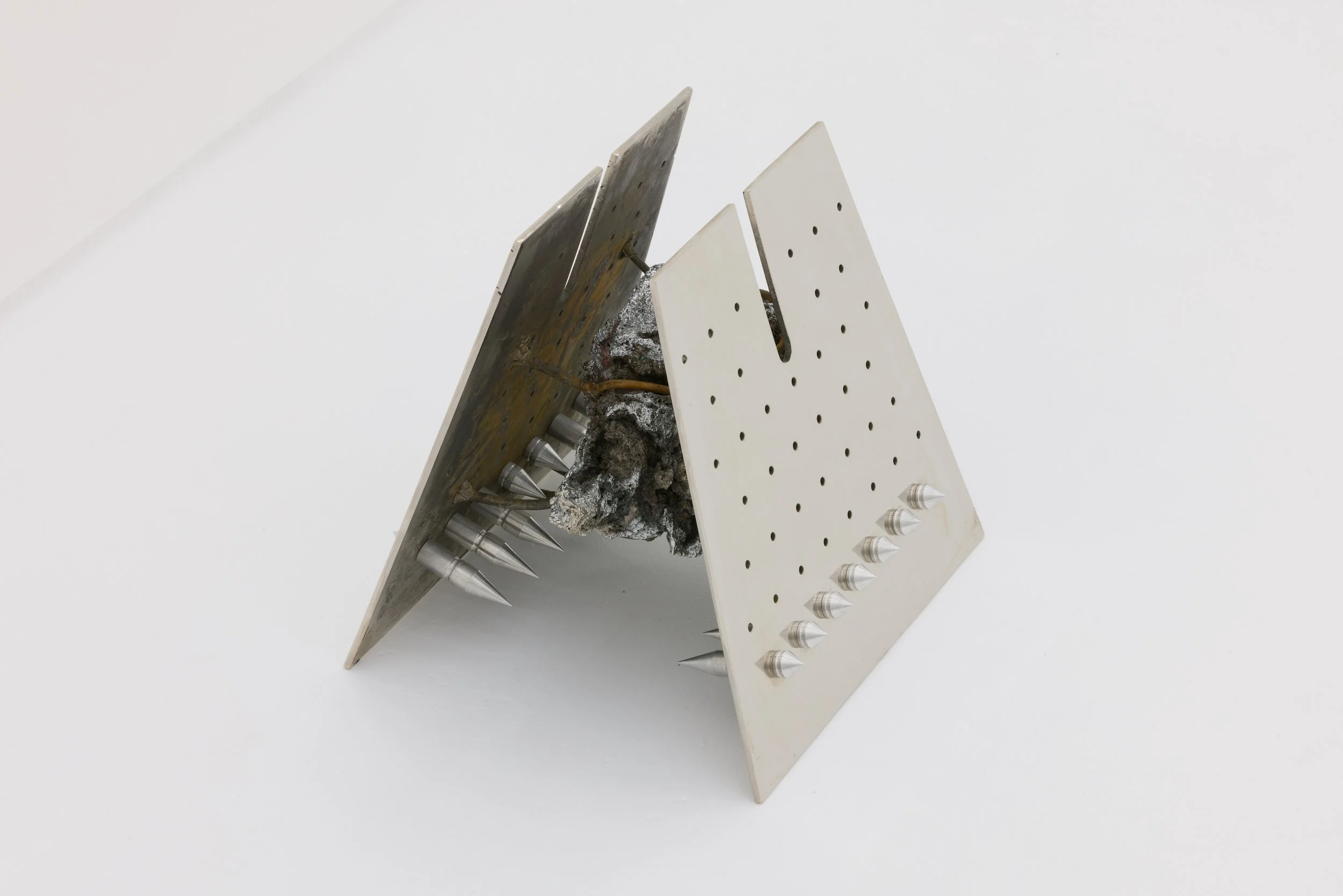
Yeni Mao,fig 21.6 beat box, 2023, nickel-plated steel, nickel-plated volcanic stone, aluminium, 11⅜ x 11 x 11¾ in.
Frieze NY 2026
Yeni Mao
Booth F09
The Shed
May 13 - 17, 2026
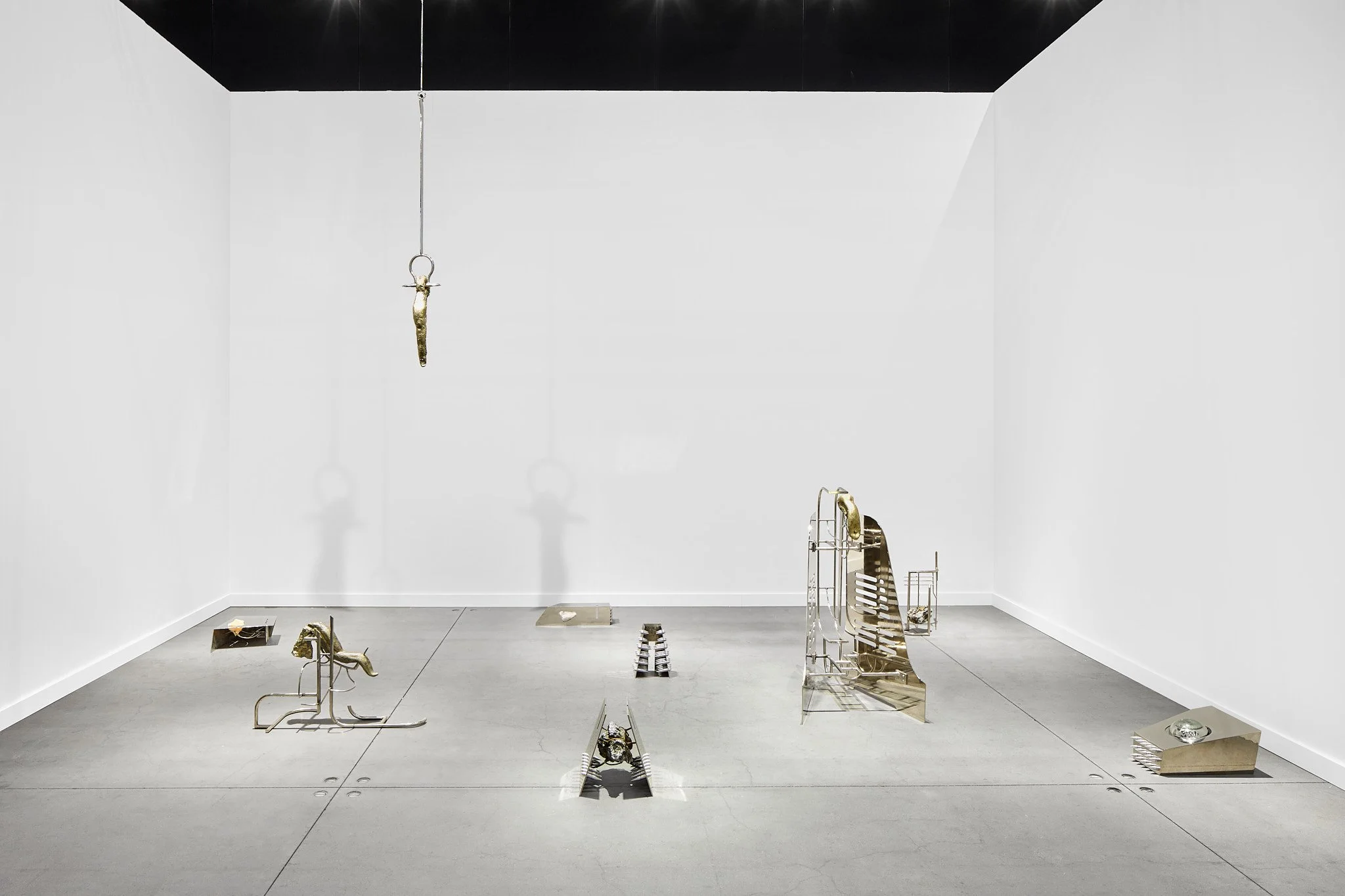
Sargent’s Daughters is delighted to present a solo presentation of Mexico City-based sculptor Yeni Mao (b. 1971, Canada), marking both the gallery and the artist's Frieze New York debut. The booth features a constellation of Mao’s recent sculptures that cradle found or bronze-cast objects in nickel-plated steel armatures, each work enacting a negotiation between control and surrender.
Mao’s cyborg assemblages emerge from the architecture they inhabit, whether suspended from the ceiling or low to the floor. Though they reference the lexicon of industrial production, the sculptures are hand-made by Mao in his Mexico City studio, drawing on his experience in foundries and architectural trades. Each sculpture begins with a central object – stone or glass collected by the artist, articulated ceramic forms, or cows’ tongues cast delicately in bronze. Mao then builds a steel frame for this object, which acts as both a support for its display and an animating form. Nickel-plating gives the steel a mirror-like surface, though subtle indications of hand-making remain in grinding marks and welded lines.
As the viewer experiences the work, the anatomy of their body is equated with Mao’s built systems, suggesting that the construction and deconstruction of our identities and selves are also fabrications. Viewers are forced to navigate the work, avoiding sharp spikes and crouching low to view internal structures, their images reflected in the polished metal. For Mao, the combination of the found objects and the metal frames evokes the interrelation of flesh and industry. The laboring body exists in relation to mechanical processes, ehere the individual is subsumed by the apparatus. Mao’s work plays out this tension, yet through alluring textures and forms, makes us desire the machine.
Yeni Mao (b. 1971 Guelph, Canada) is a Chinese-American sculptor based in Mexico City. He received a BFA from The School of Art Institute of Chicago, and subsequently trained in foundry work and architectural industries in the US. Recent solo exhibitions include Campeche (Mexico City, MX), Brooke Benington (London, UK), Frieze Focus with Make Room (Los Angeles, CA), guadalajara90210 (Guadalajara, MX). Recent group shows include Museo Tamayo and Sargent’s Daughters. Mao is a recipient of the Pollock-Krasner Foundation Grant 2021. Mao’s work has been written about in Art in America, The New York Times, Time Out New York, and The Village Voice. He will have a solo exhibition at Museo Anahuacalli in Mexico City in Autumn 2026.
News
Observer | May 14, 2026