
Debbie Lawson | In a Cowslip’s Bell I Lie
April 23 – May 30, 2026
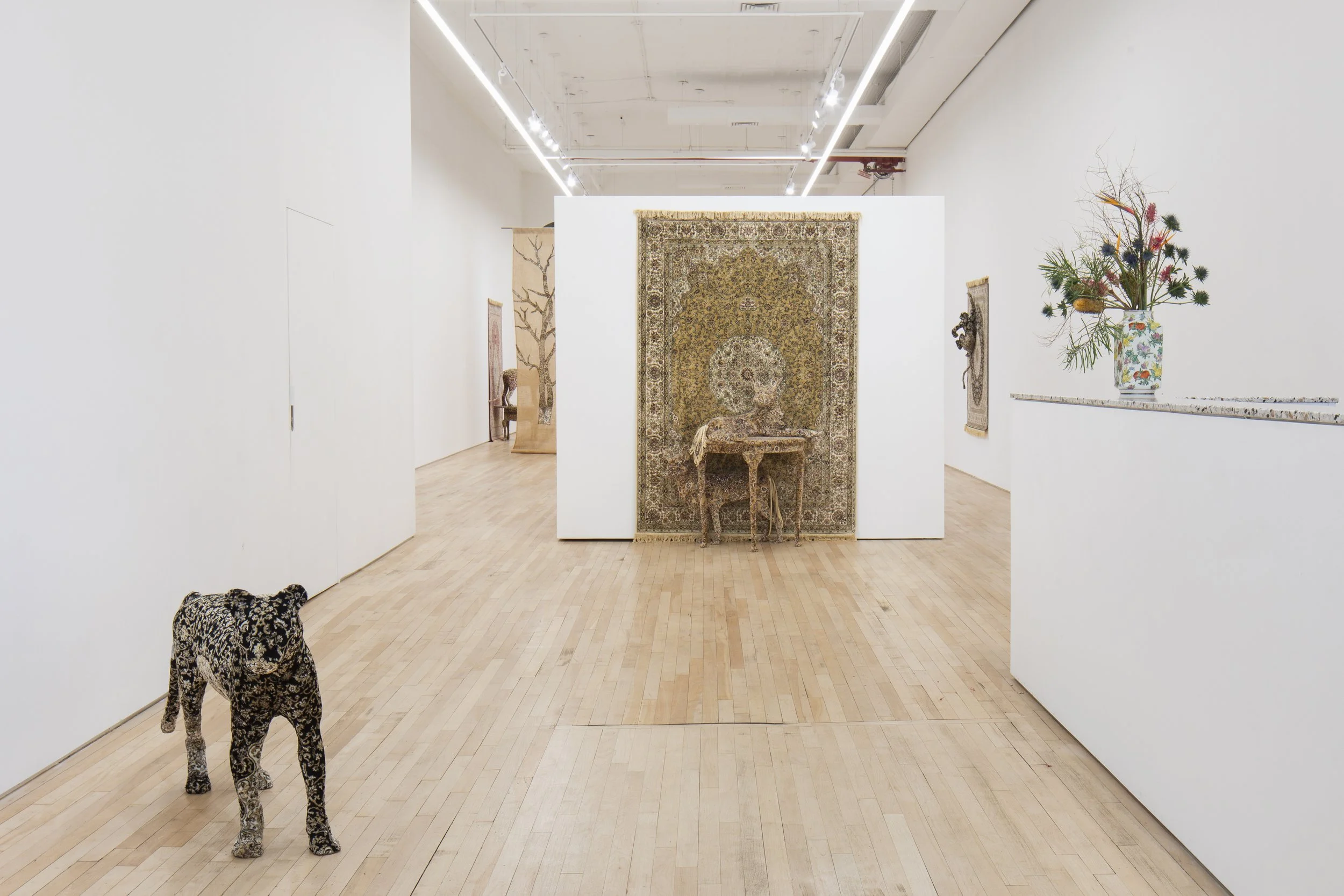
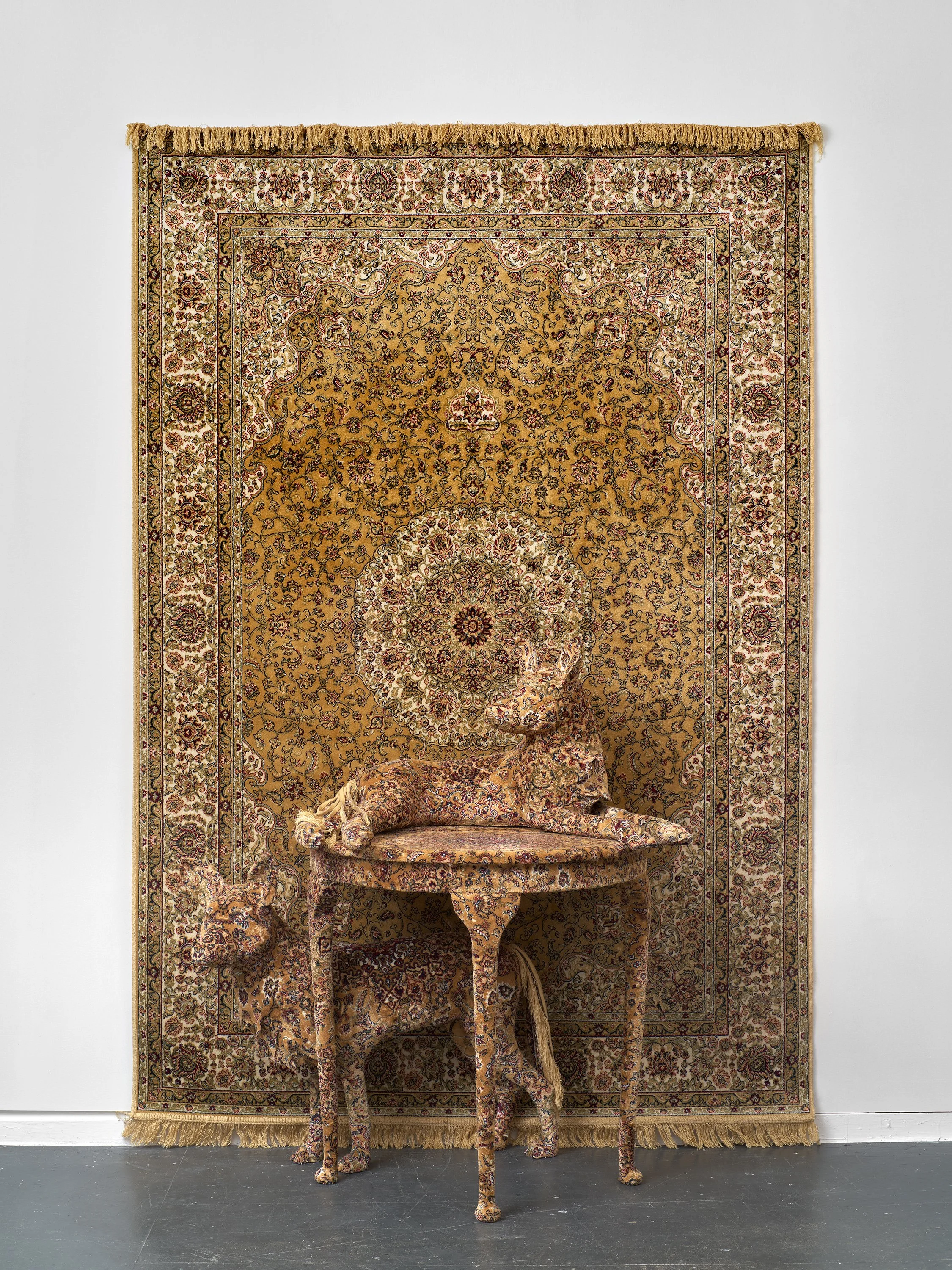
Debbie Lawson, Wild Dog Sundown, 2025, Carpet and mixed media, 92 1/2 x 61 3/4 x 24 3/4 in.
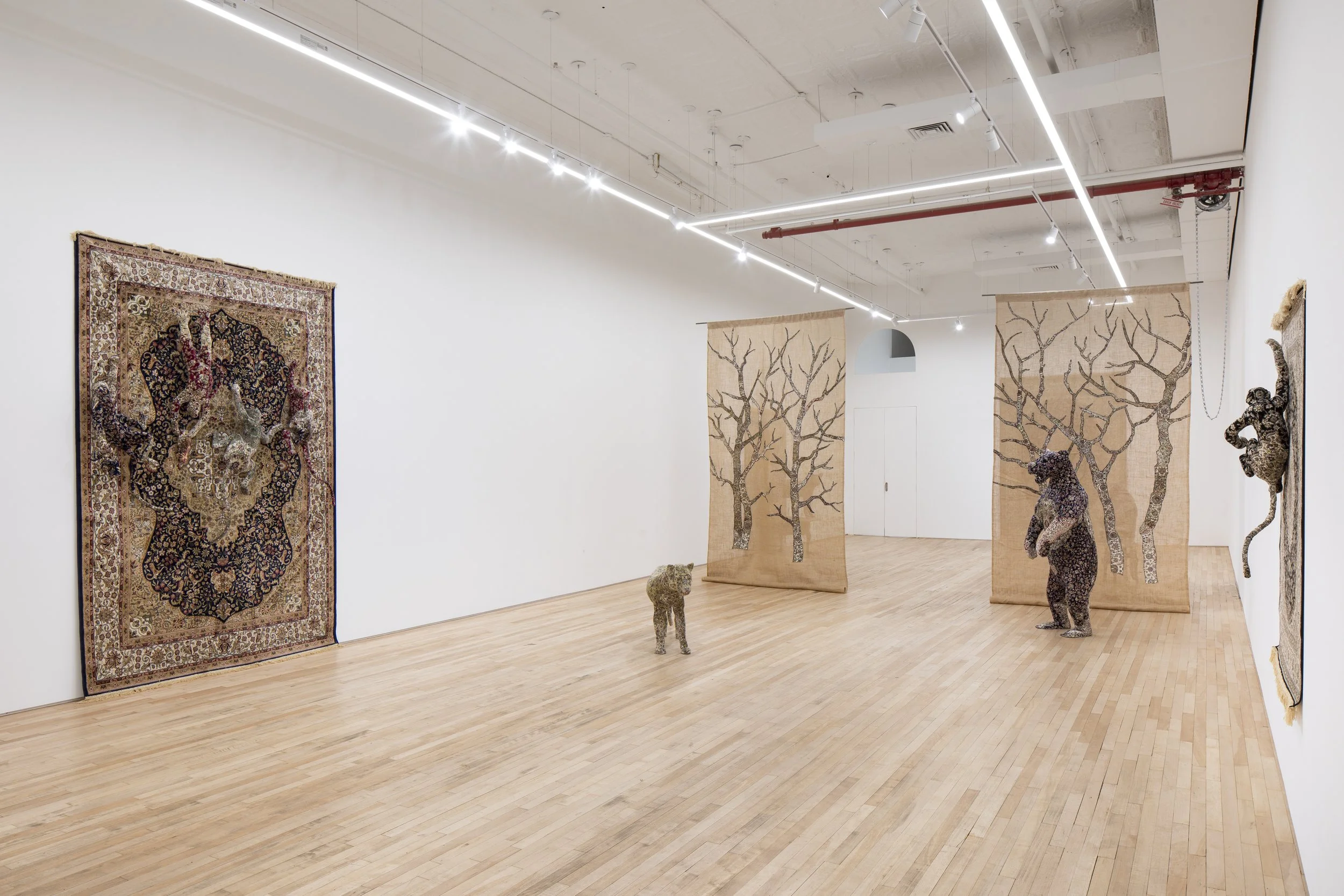
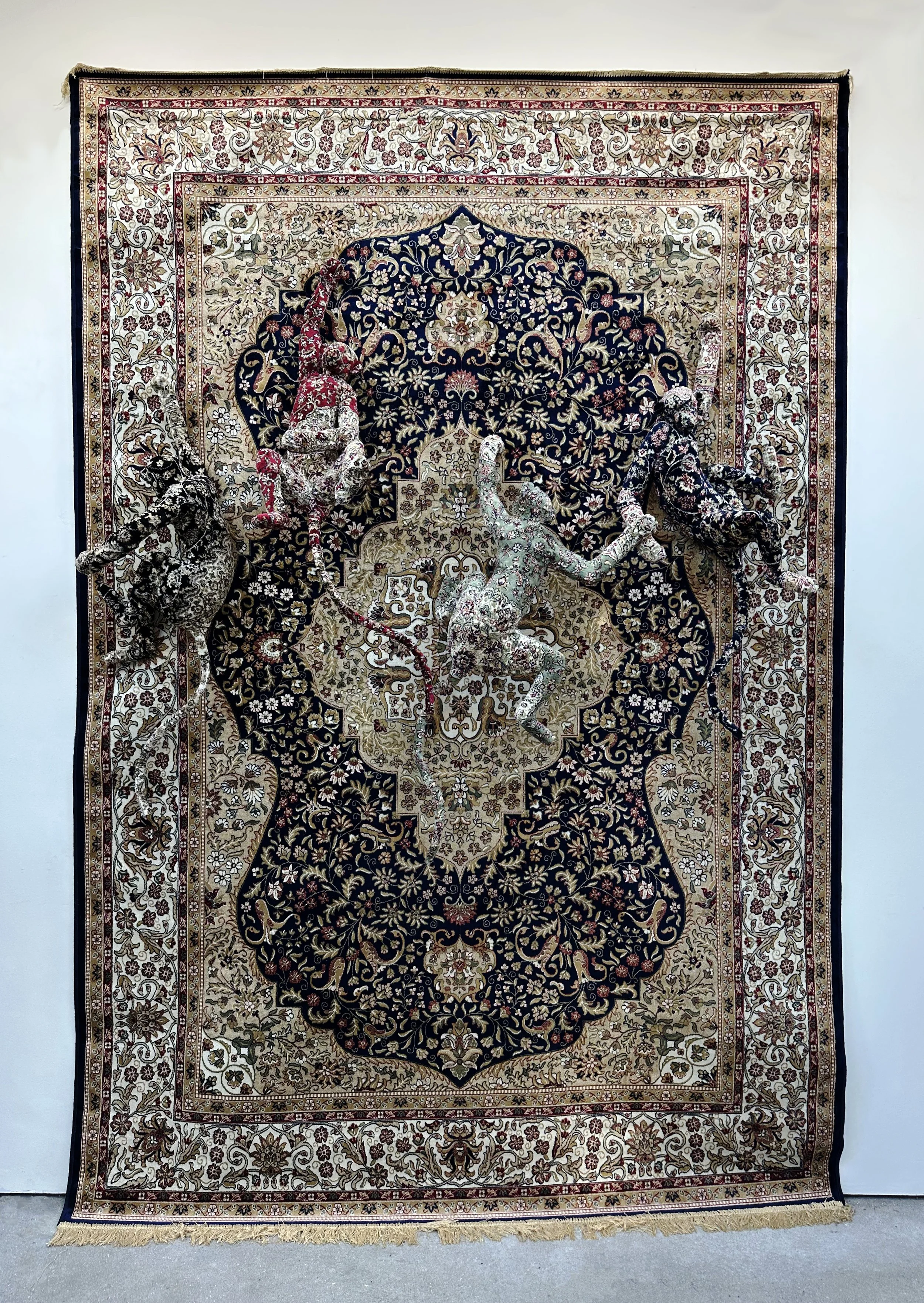
Debbie Lawson, Monkey Puzzle, 2026, Carpet and mixed media, 116⅛ x 78¾ x 10⅝ in.
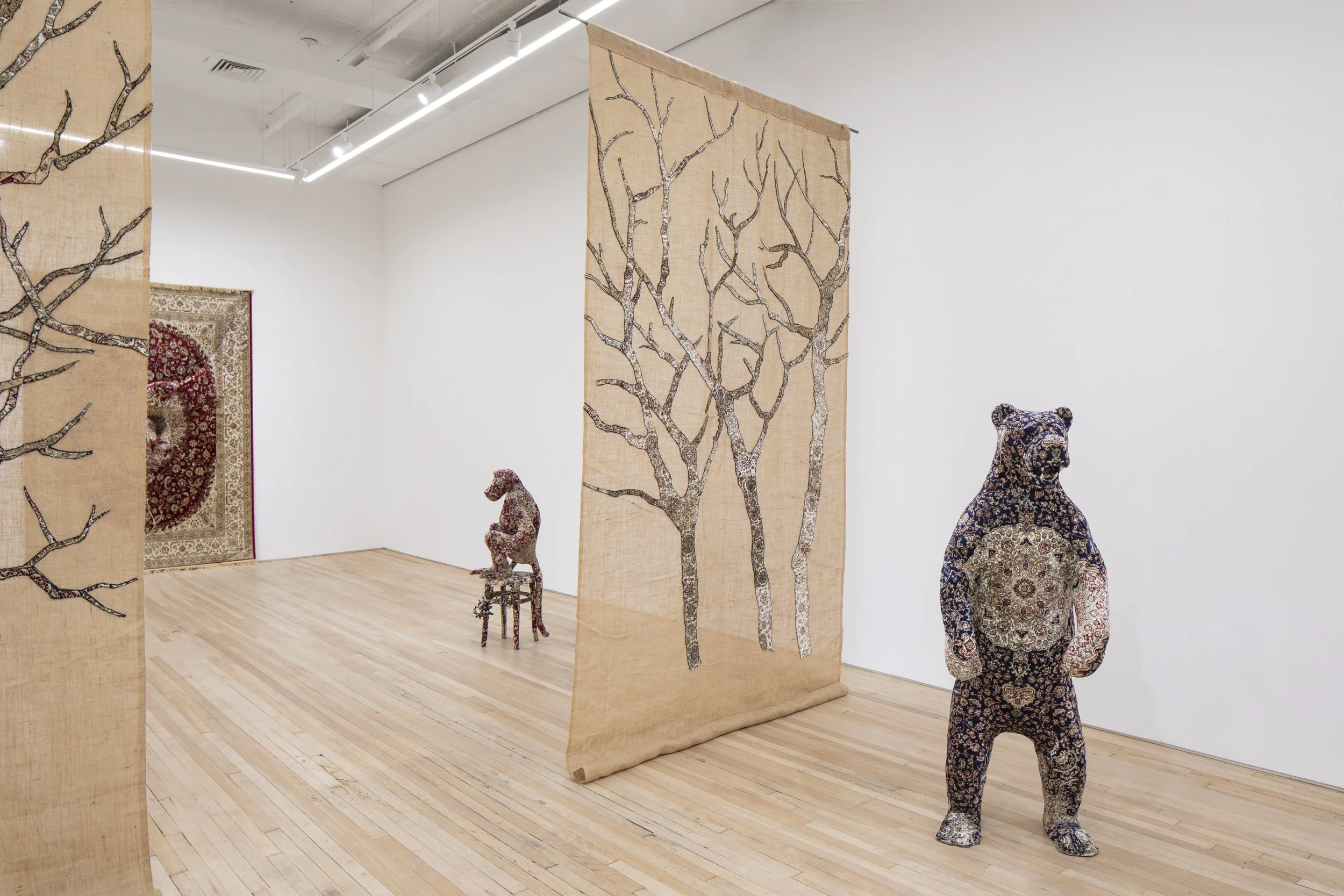
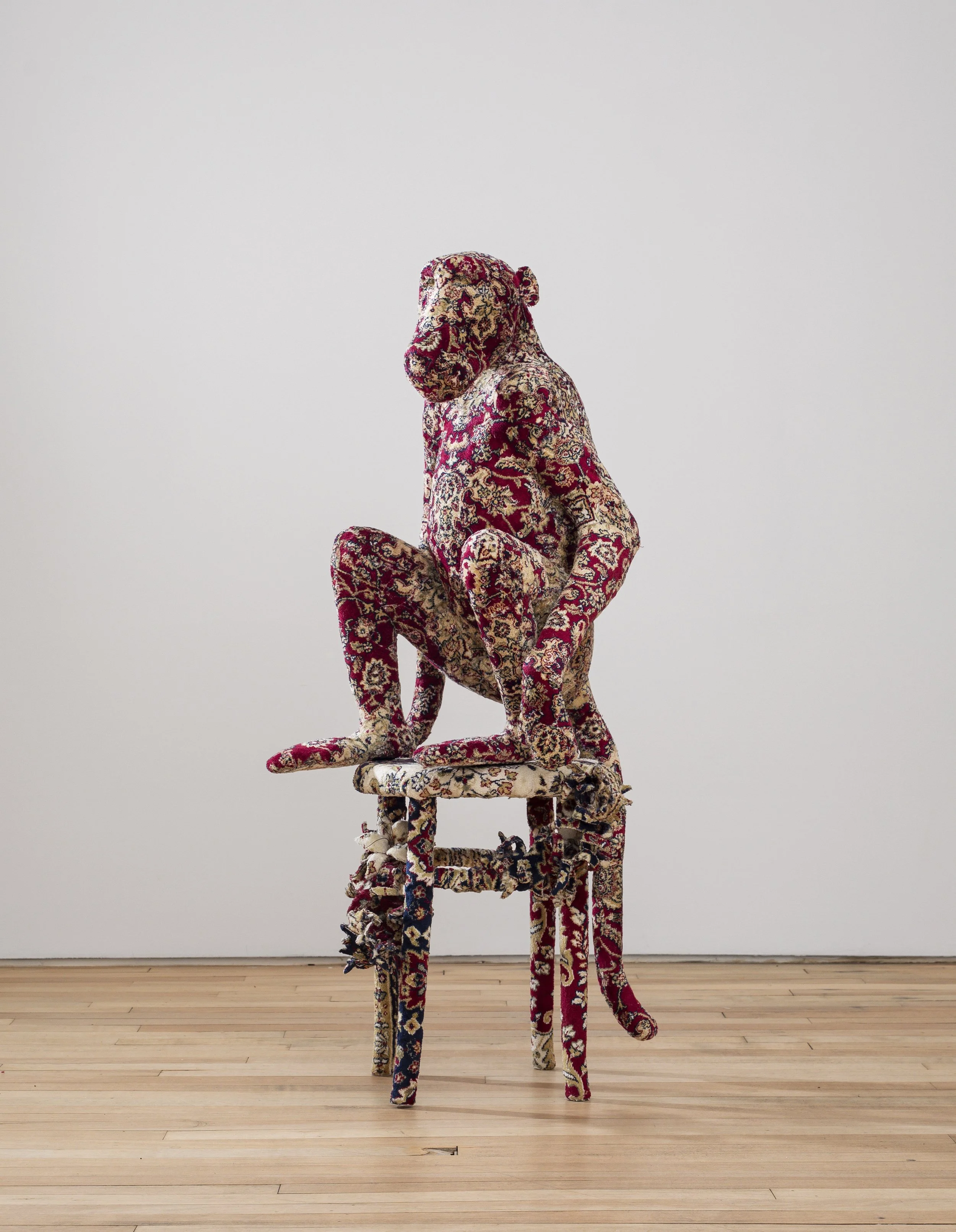
Debbie Lawson, Prospero, 2026, Carpet and mixed media, 52 x 19¾ x 18½ in.
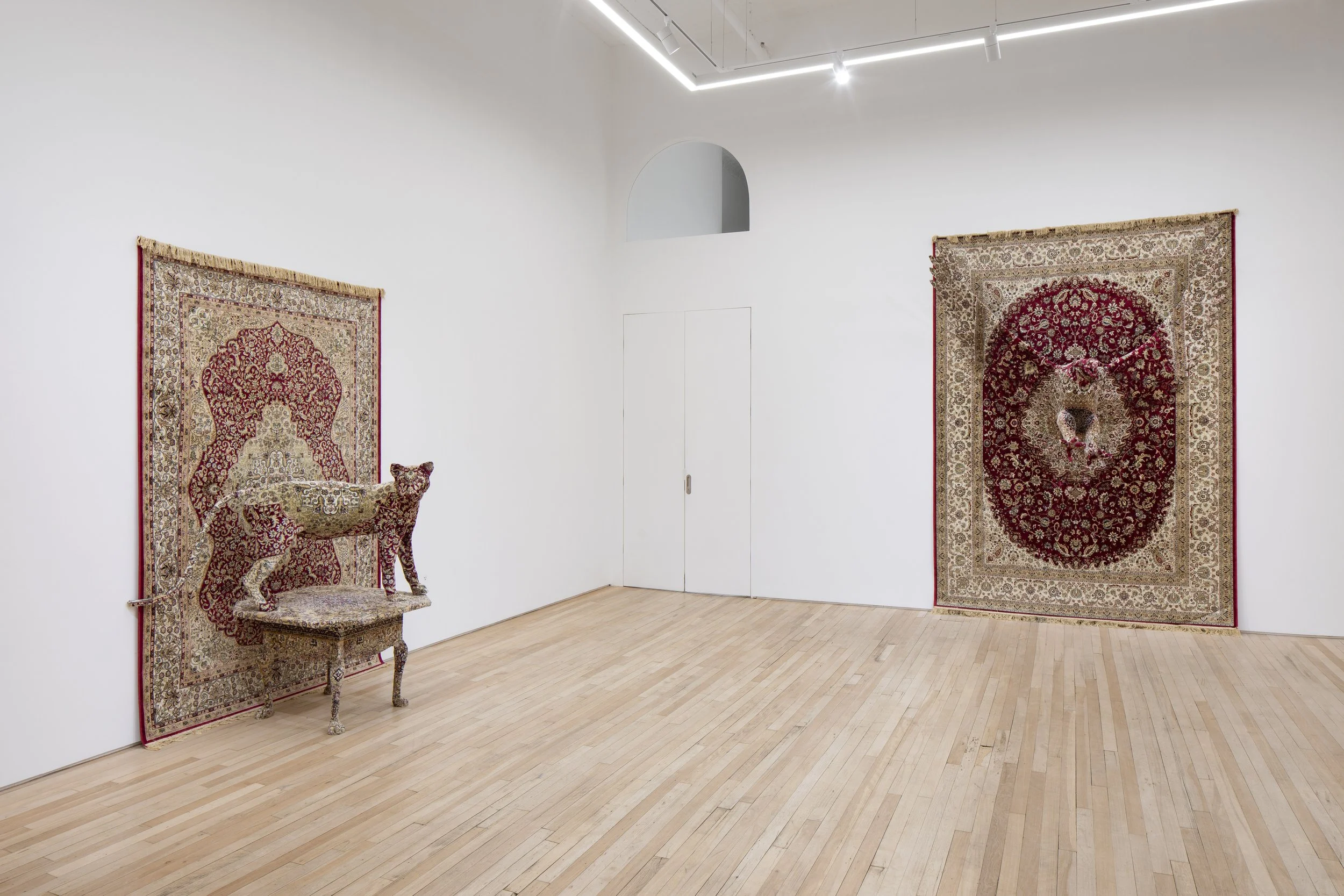
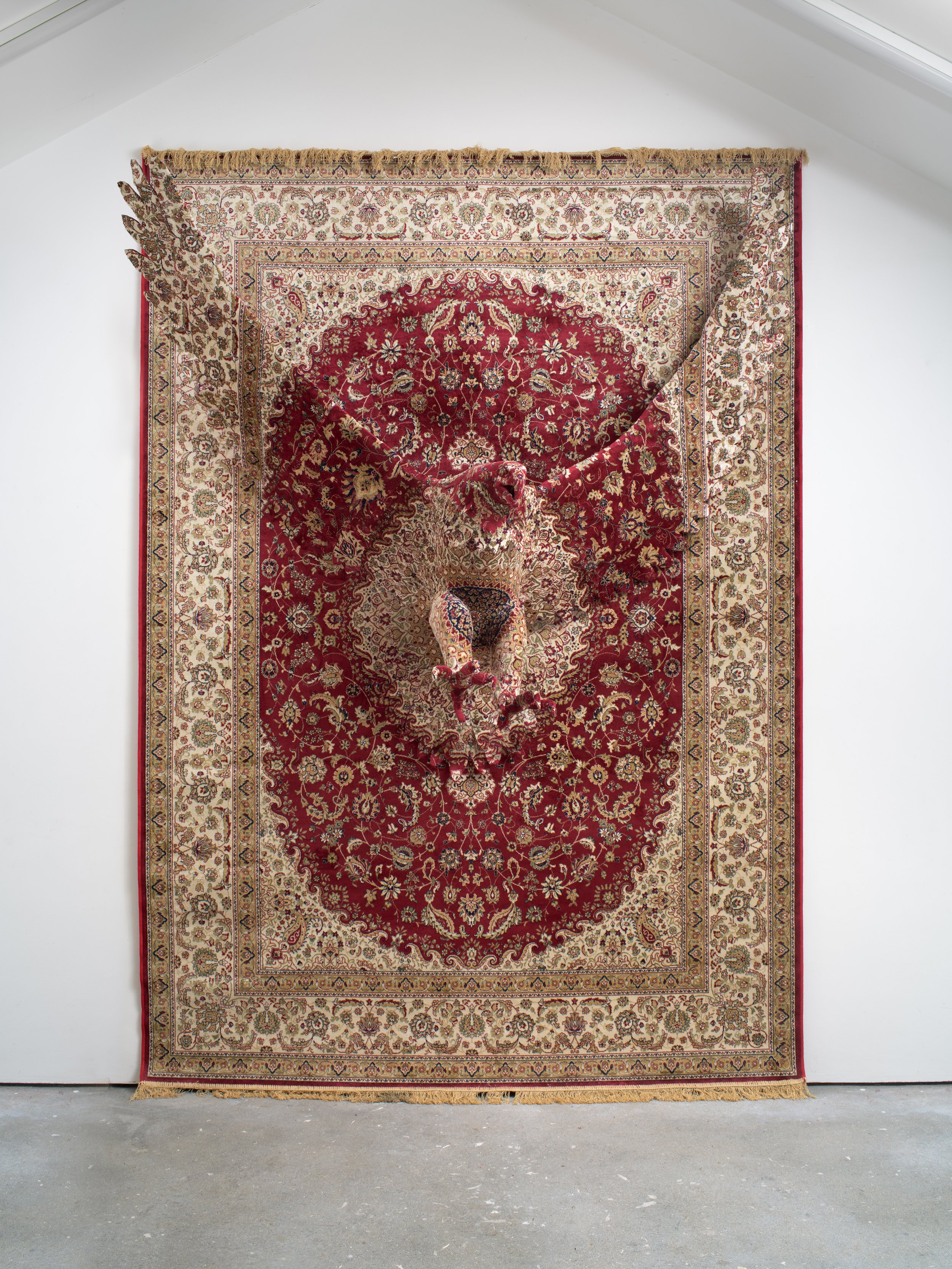
Debbie Lawson, Red Eagle, 2026, Carpet, steel and mixed media, 116⅛ x 78¾ x 21⅝ in.
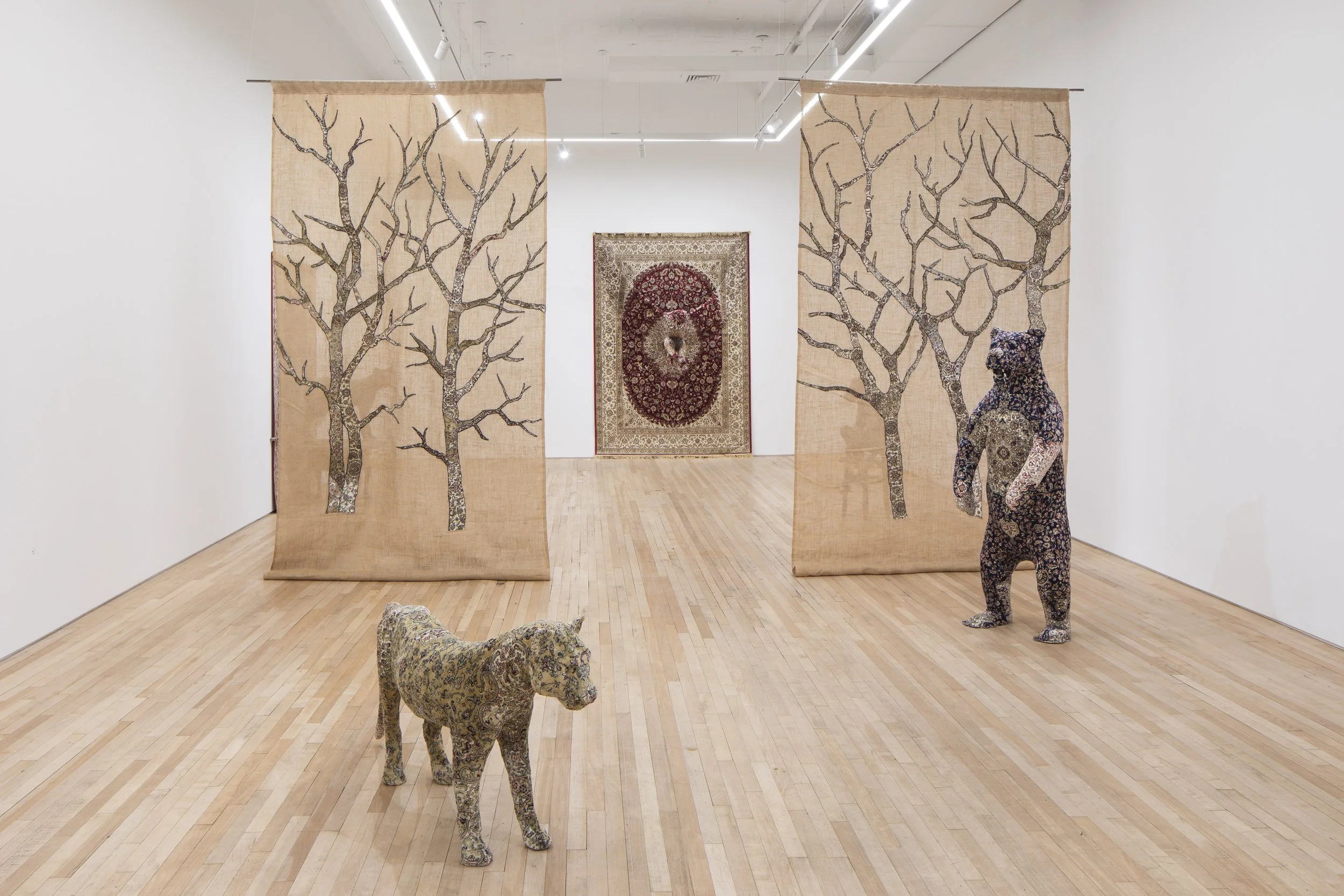
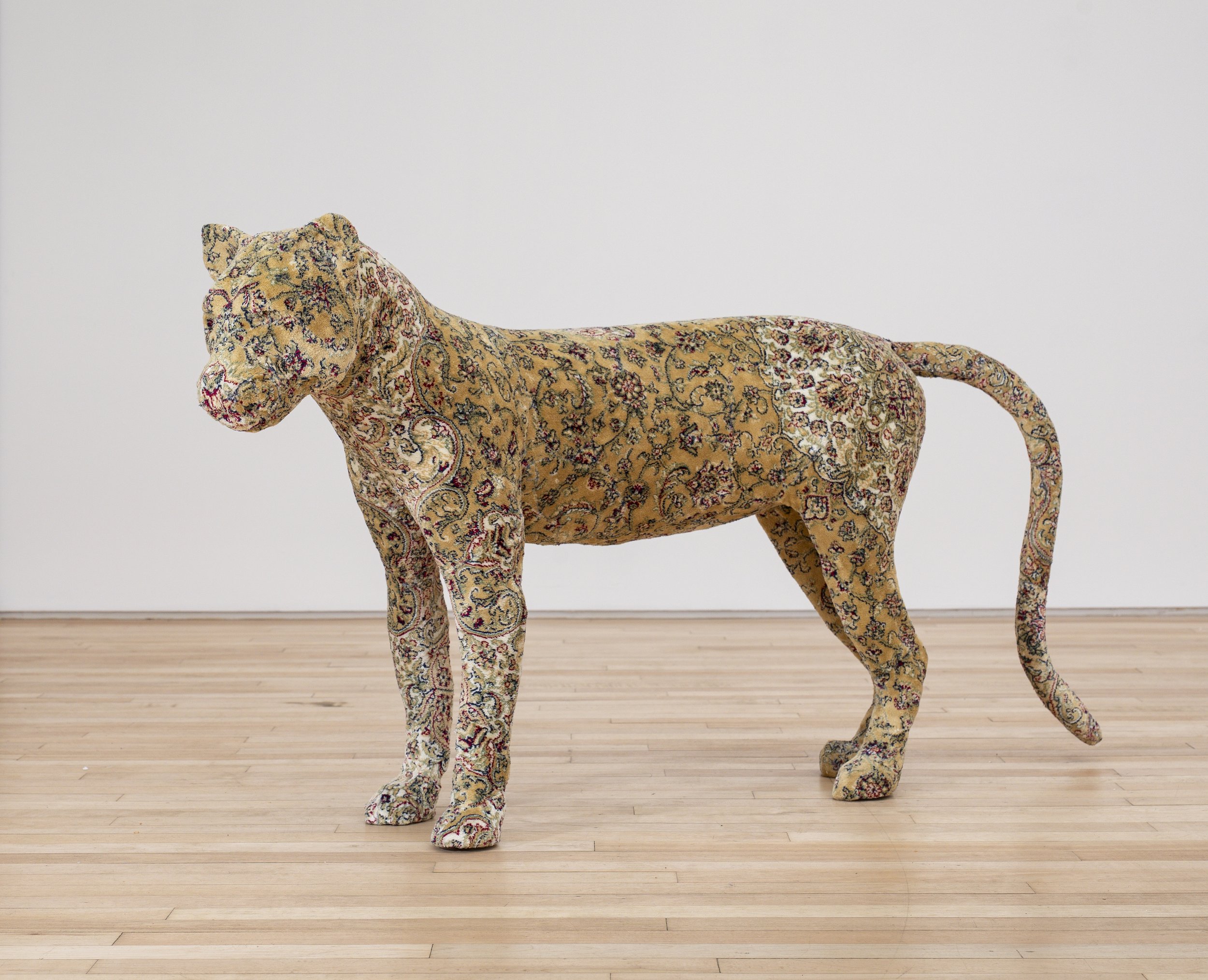
Debbie Lawson, Gold Cougar, 2026, Carpet and mixed media, 70⅞ x 28¾ x 9½ in.
Debbie Lawson | In a Cowslip’s Bell I Lie
April 23, 2026 – May 30, 2026
Sargent’s Daughters is delighted to present “In a Cowslip’s Bell I Lie,” a solo exhibition of new works by British multimedia artist Debbie Lawson, her second solo with the gallery and her largest exhibition in the United States to date. Lawson’s sculptures of life-sized animals seem to emerge miraculously from Persian carpets through a trompe-l’oeil effect, provoking questions about the relationships between decoration and nature, craft and camouflage.
Lawson begins each work by sculpting the bears, cougars, wild dogs, and monkeys, often creating a wire and masking tape armature and finishing them in Jesmonite resin. Each creature is then covered in patterned carpet, which Lawson meticulously cuts and pieces to create a seamless surface. In this body of work, some animals sit on or emerge from furniture or rugs, and Lawson precisely aligns the patterns to create the illusion of a continuous surface. Lawson’s work transforms these quotidian objects into fragments of a narrative, imbuing them with magical and uncanny animacy.
The exhibition’s title is a line from Shakespeare’s The Tempest, exclaimed by the magical spirit Ariel just before being released from servitude to the all-powerful sorcerer Prospero. Ariel is suddenly a free agent, no longer in the shadows but fully inhabiting the world, existing in unity with nature. For Lawson, this alludes to the natural and animal forms hidden within decorative forms and patterns – from the frescoes of Pompeii, to French Rococo mouldings, Venetian stone carvings, the designs of William Morris, and even the New York Public Library’s lions. Historical furniture often featured animal legs and feet in its design, and the animals of heraldry were carved into fireplaces and doors to mimic the fierceness of nature. Subsumed by design and architecture, we lose sight of the wildness of these creatures, but in Lawson’s work we can imagine them emerging from their material and societal constraints to roam freely.
Lawson’s work allows us a direct connection with these hidden narratives, often disregarded because of their relationships to the feminized realms of domesticity and craft. For Lawson, these concerns are deeply personal, as artmaking and textile crafts go back generations in her family and her hometown of Dundee, Scotland. She reflects, “I’m also thinking about women, including some of my near ancestors, so often confined by the constraints of the patriarchal society in which they/we lived, trapped in the daily grind and unable to pursue their own considerable creative talents or fully inhabit the world.” Lawson’s animals can be read as avatars of those who have historically been confined to the background.
In times of uncertainty, the veil between polite society and the wilderness feels even thinner, and fantastical worlds like those of The Tempest can feel more tangible than our lived reality. The enchanted landscape created by Lawson in the gallery foregrounds the strangeness and power of what we overlook – the material substance of our daily lives, the labor of handmaking, and the human and non-human creatures we cast aside. Her savage animals invite each of us to access the wildest parts of ourselves.
Debbie Lawson (b. 1966, Dundee, Scotland) lives and works in London and Kent. She graduated with an MA in Sculpture from the Royal College of Art, a BA (First Class Hons) in Fine Art at Central Saint Martins, and BA (Hons) English Literature at the University of East Anglia. Her work is held in UK and worldwide collections including The UK Parliamentary Collection, The Saatchi Gallery, Nottingham Castle Museum, University of the Arts London and Dundee University.
Sargent’s Daughters presented Lawson’s first U.S. solo exhibition, Hidden Territories, in February 2024. Other recent solo exhibitions include Art In Focus: Debbie Lawson, Rockefeller Center (New York, NY), commissioned by Art Production Fund; The Fergusson Prize: Magic Carpet, Fergusson Gallery (Perth, Scotland); Our House, McManus Gallery and Museum (Dundee, Scotland), supported by the Scottish Arts Council; Living Rooms, Nordisk Kunst Plattform (Brusand, Norway) supported by the British Council; and Chairway to Heaven, Economist Plaza (London, UK), commissioned by the Contemporary Art Society. Recent group exhibitions include the Cheongju Craft Biennale 2025 (Cheongju-si, Republic of Korea); Reimag(in)ing The Victorians, Djanogly Gallery (Nottingham, UK); Seeing With Your Feet: The Carpet in Contemporary Art, Museum Villa Rot (Burgrieden, Germany); The 197th Annual Exhibition, The Royal Scottish Academy (Edinburgh, UK); The Turner Contemporary Open, Turner Contemporary (Margate, UK); the 250th Summer Exhibition, Royal Academy of Arts (London, UK) where her work was selected by curator/artist Grayson Perry RA, The Ruskin Prize, Millennium Gallery (Sheffield, UK); Eccentric Spaces, Riccardo Costantini Gallery (Turin, Italy), and Material Power: Rewoven, Hardwick Hall (Chesterfield, UK). Her work will be included in Homo Faber 2026, Fondazione Giorgio Cini (Venice, Italy), designed by Es Devlin.
Press