
Sarah Zapata | In escape from the vices of idleness
September 9 – October 24, 2026
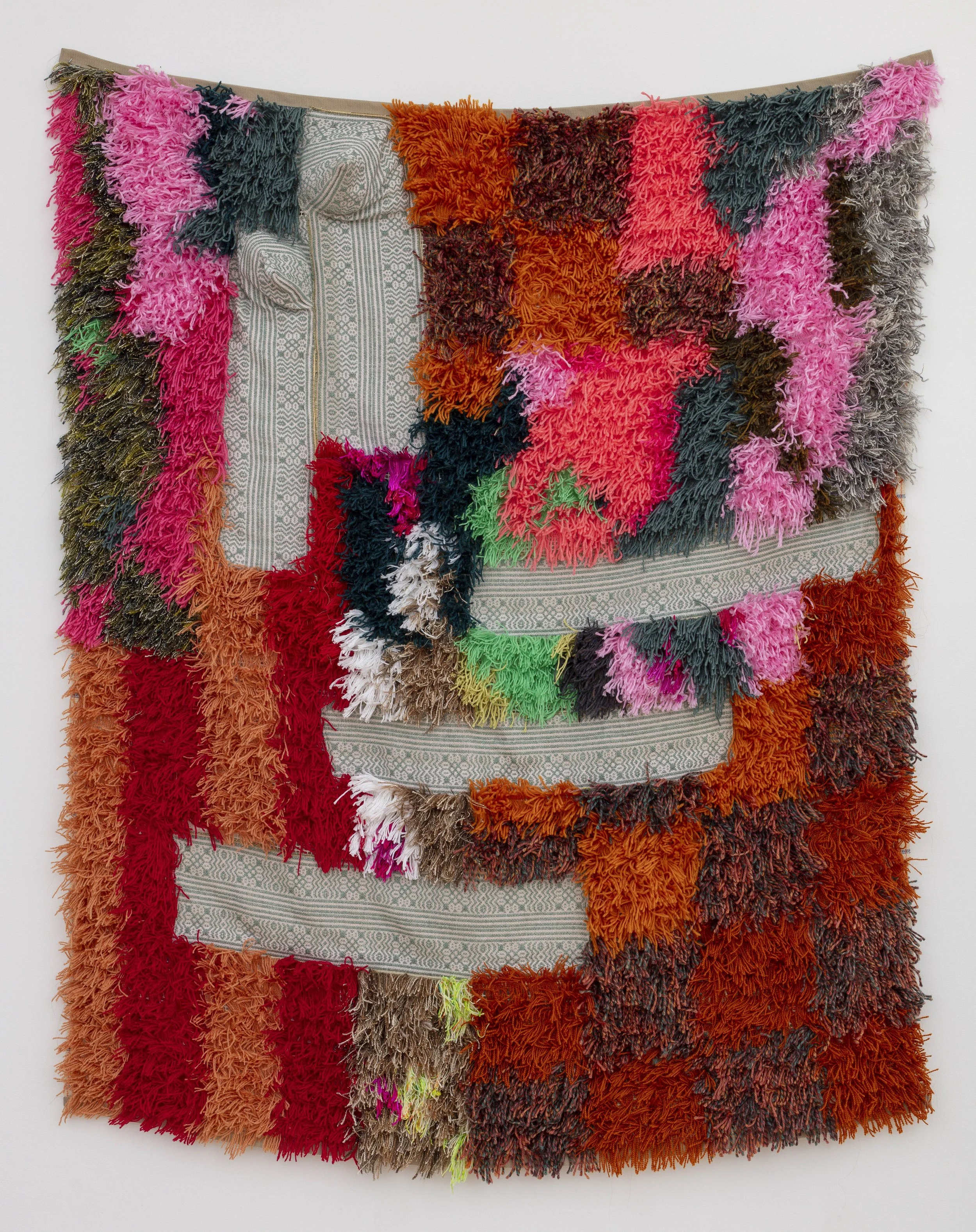
Sarah Zapata, Column II (Panel A), hand-woven cloth, hand embroidery, and natural and synthetic fibers, 60 x 72 in.
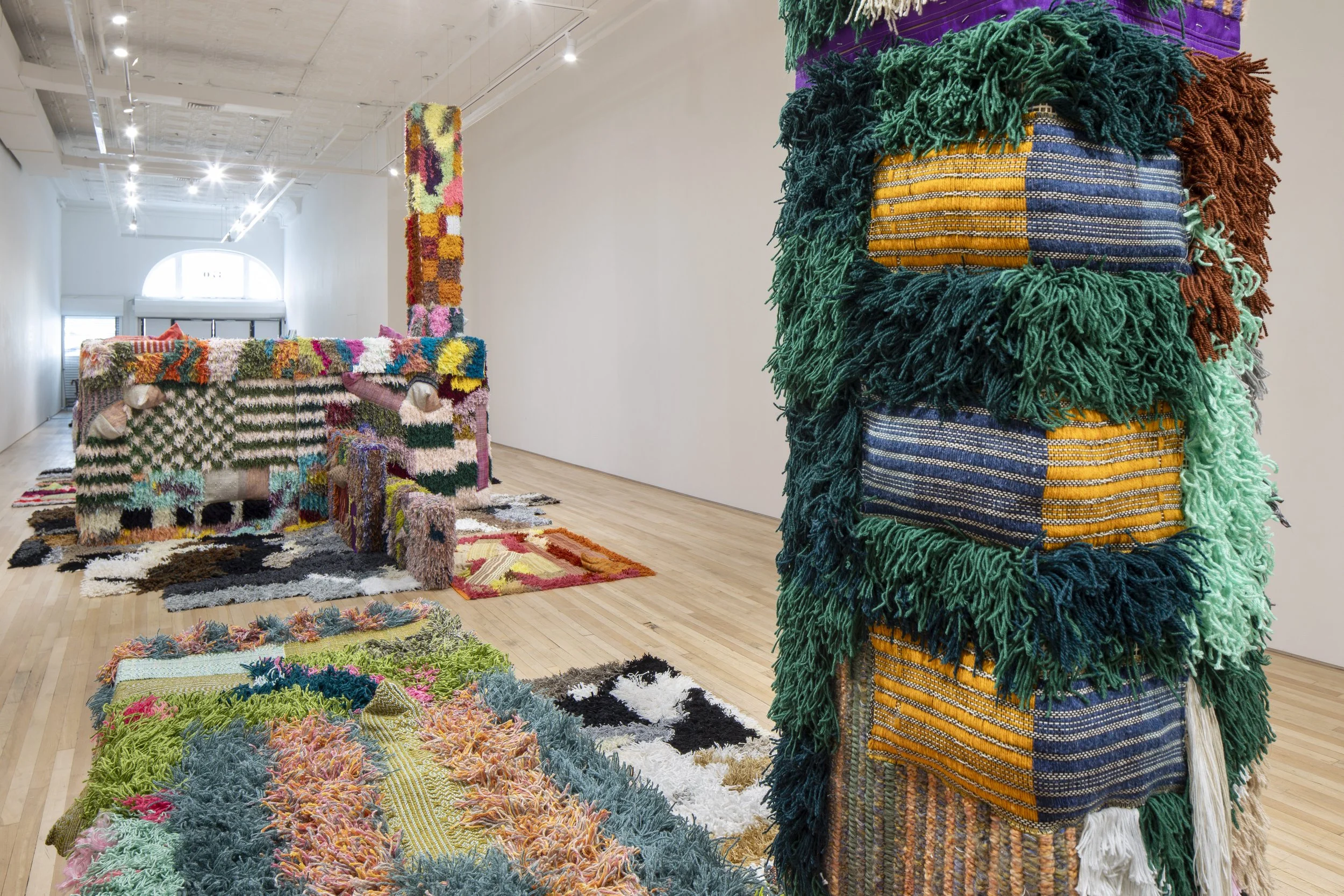
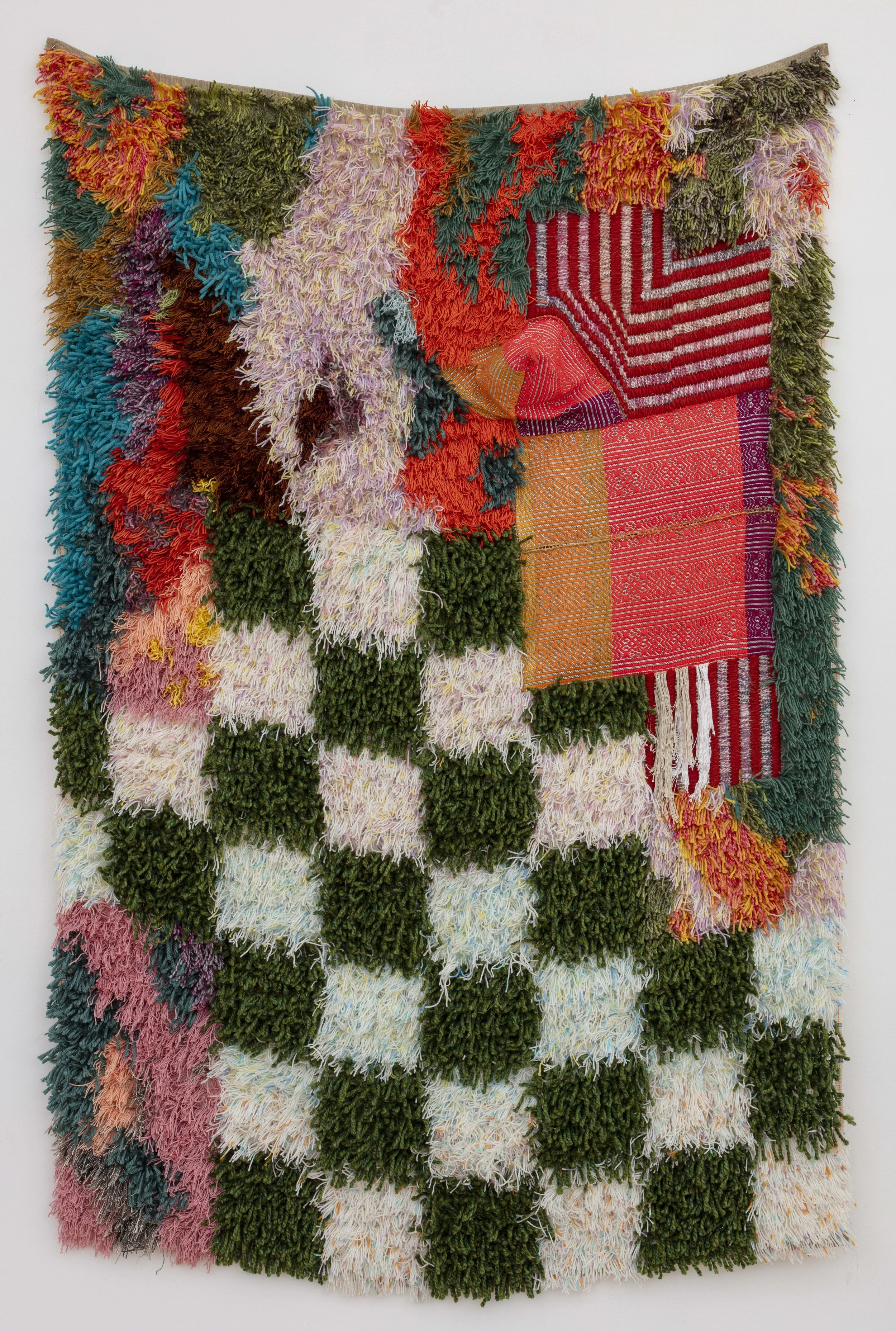
Sarah Zapata, Crate Ruin I (Panel 1),2026 hand-woven cloth, hand embroidery, and natural and synthetic fibers, 60 x 89 in.
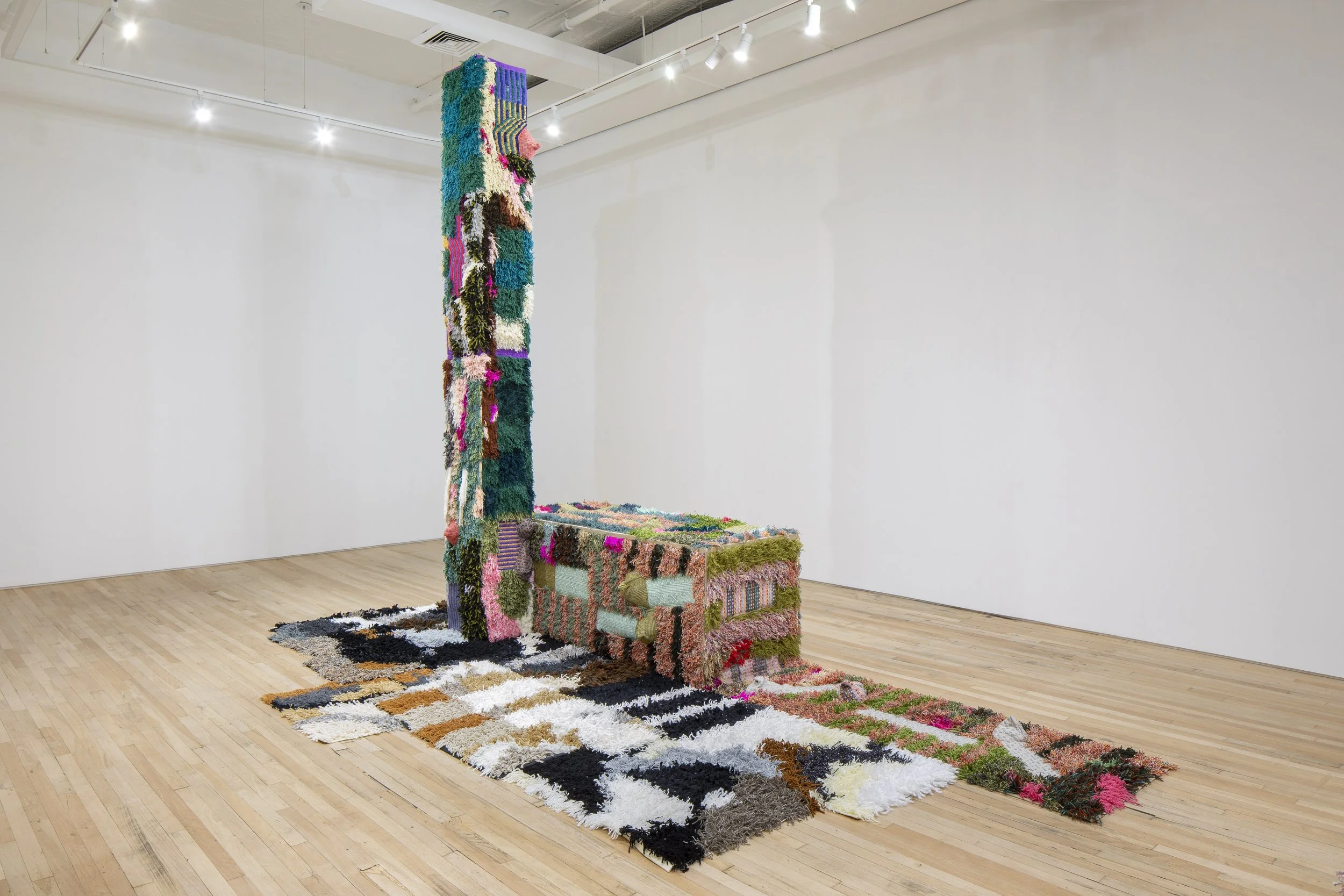
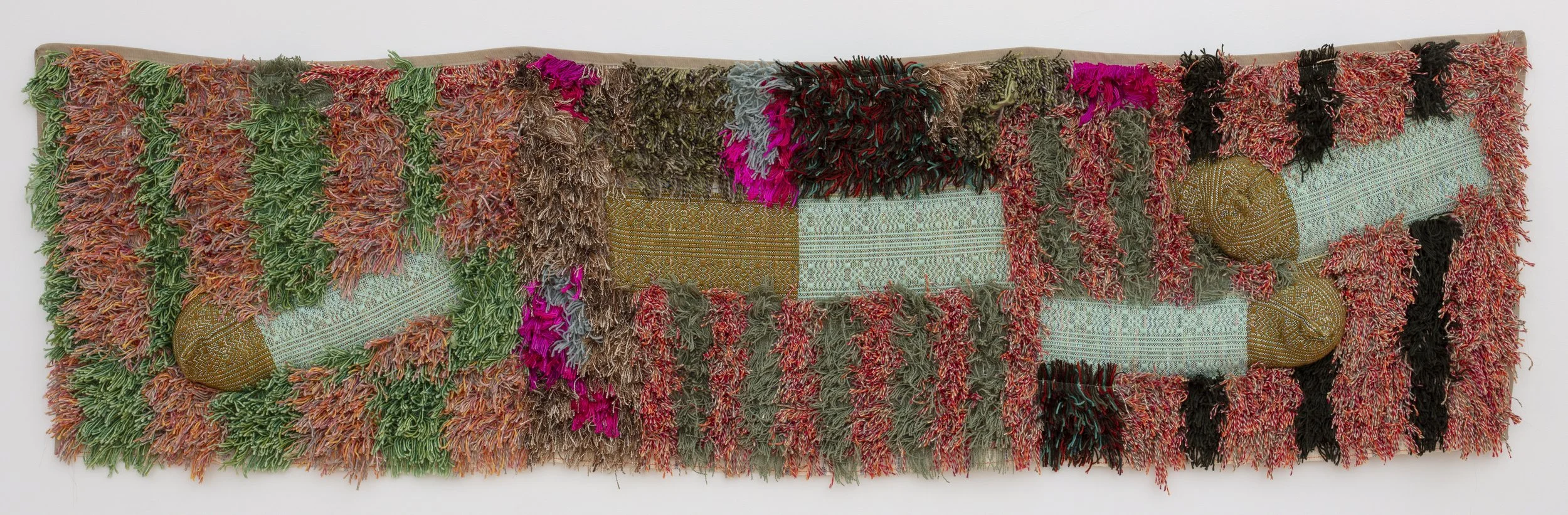
Sarah Zapata, Crate Ruin II (Panel 3), 2026, hand-woven cloth, hand embroidery, and natural and synthetic fibers, 30 x 107 in.
Sarah Zapata | In escape from the vices of idleness
September 9 – October 24, 2026
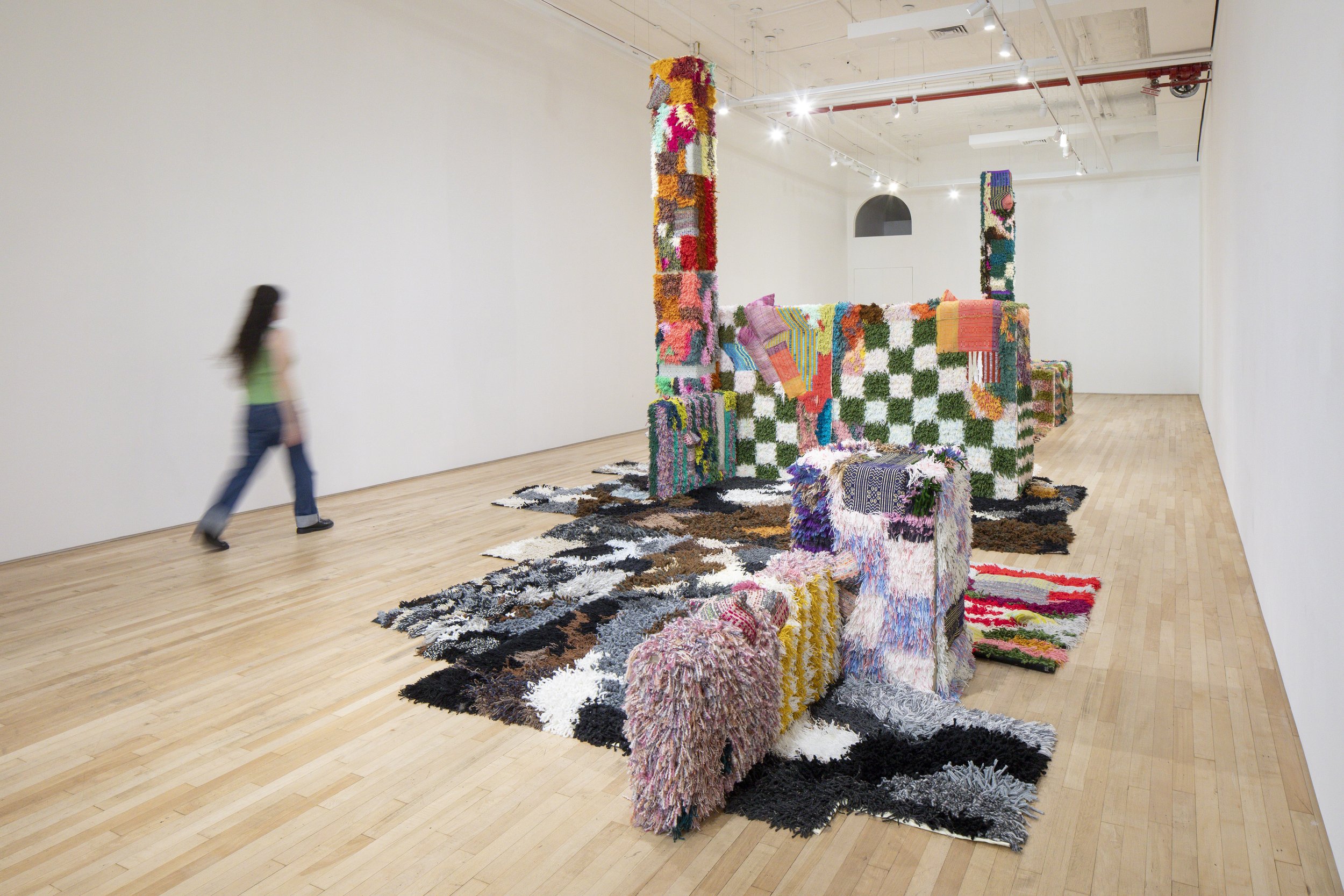
In escape from the vices of idleness is a dynamic, layered installation of a new body of work by Peruvian-American multidisciplinary artist Sarah Zapata (b. 1988, Corpus Christi, TX; lives and works in Brooklyn, NY), marking her first solo presentation with the gallery. Zapata creates hand-woven textile sculptures rooted in her Peruvian heritage, referencing millennia of craft and knowledge production. Her brightly colored and vibrantly patterned compositions destabilize colonial ontologies – restructuring architectural spaces through softness, eliding boundaries between past and present.
Each of Zapata’s textile works is made by hand by the artist. The resulting layers of weaving, latch-hooking, and embroidery contain the embodied timelines of their making, an accumulation of generations of technical knowledge, years of gathering and learning, and hours of labor. The bold stripes and patterns reference ancient Andean iconographies, modernist architectural conventions, and contemporary queer culture.
For this exhibition, Zapata created a monumental installation that viewers are invited to circumnavigate. Brutalist cubic forms are completely covered in vibrant textile works, which spill out onto the floor and fill the entire center of the gallery space. Each textile panel combines plush fields of latch-hooked or woven color with soft, gently rounded protuberances, which appear like mountains or breasts rising from a field. Vibrant stripes in contrasting colors are produced through hand-embroidery, and their forms suggest both topographical maps and geoglyphs, like the Nazca lines, spreading across a landscape. The intertwined geometries of Zapata’s hand-weavings recall the abstracted forms of Pre-Colombian fabric artworks. The soft geography of these textiles distorts and overwhelms the rectilinear forms of the underlying structures and of the gallery itself.
Zapata’s works envelop viewers in alternative landscapes, where solid structures become pliable, inviting us to imagine new topographies. The timescales of geological forms are placed in dialogue with those of human action, and textile labor becomes a tangible manifestation of time passing. Though formally innovative, this installation is also politically urgent. Zapata’s queer, antihierarchical ethos of flexibility and continuity run counter to hegemonic logics of control and progress. Grounded in an engagement with histories of making that stretch back before colonization, Zapata offers a utopian alternative to current systems of extraction and violence.
News
Sarah Zapata (b. 1988, Corpus Christi, TX) employs weaving, tufting and traditional craft techniques to create loud, architecturally responsive installations that traverse themes of gender, colonialism and fantasy. Zapata’s site-specific works reflect her intersecting identities as a queer woman of Peruvian heritage raised in Evangelical South Texas and now based in New York.
Zapata has had solo exhibitions at Various Small Fires (2025) in Los Angeles, California, Arizona State University Museum (2024) in Tempe, Arizona, Galleria Poggiali (2023) in Milan, Italy, and the Kemper Museum of Contemporary Art (2023) in Kansas City, Missouri. She has an upcoming solo exhibition at the Bass Museum in Miami, Florida, expected to open fall 2026. She was selected as a 2026 Chinati Foundation Artist-in-Residence, and has worked as a resident at International Studio & Curatorial Program, Fountainhead Arts, Harpo Foundation, and others. Her work was featured in a solo presentation at the UBS Art Studio at Art Basel Miami Beach 2024.
Zapata’s work has also been featured in group exhibitions at Buffalo AKG Art Museum (2026), the Barbican Centre (2024) in London, England, Sargent’s Daughters (2024, 2025) in New York, NY, Dunes (2023) in Portland, Maine, Lisson Gallery (2023) in New York, NY, Sugar Hill Children’s Museum (2023) in New York, NY, and the Museum of Arts and Design (2023) in New York, NY. Her work has been featured in Architectural Digest Mexico, Artsy, The New York Times, PIN-UP, Galerie, BOMB Magazine, Colossal and New York Magazine.