
Wendy Red Star | One Blue Bead
March 6 – April 18, 2026
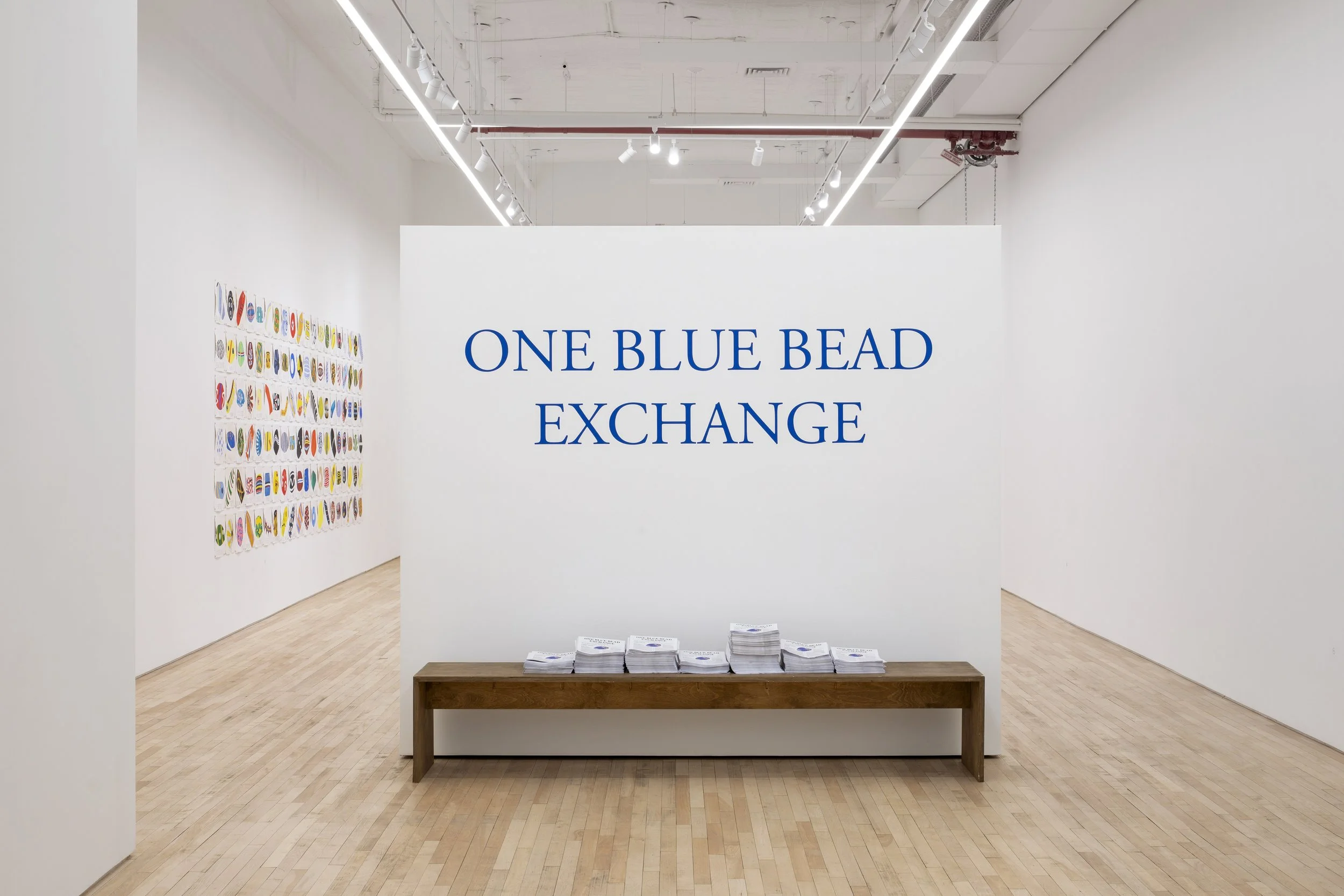
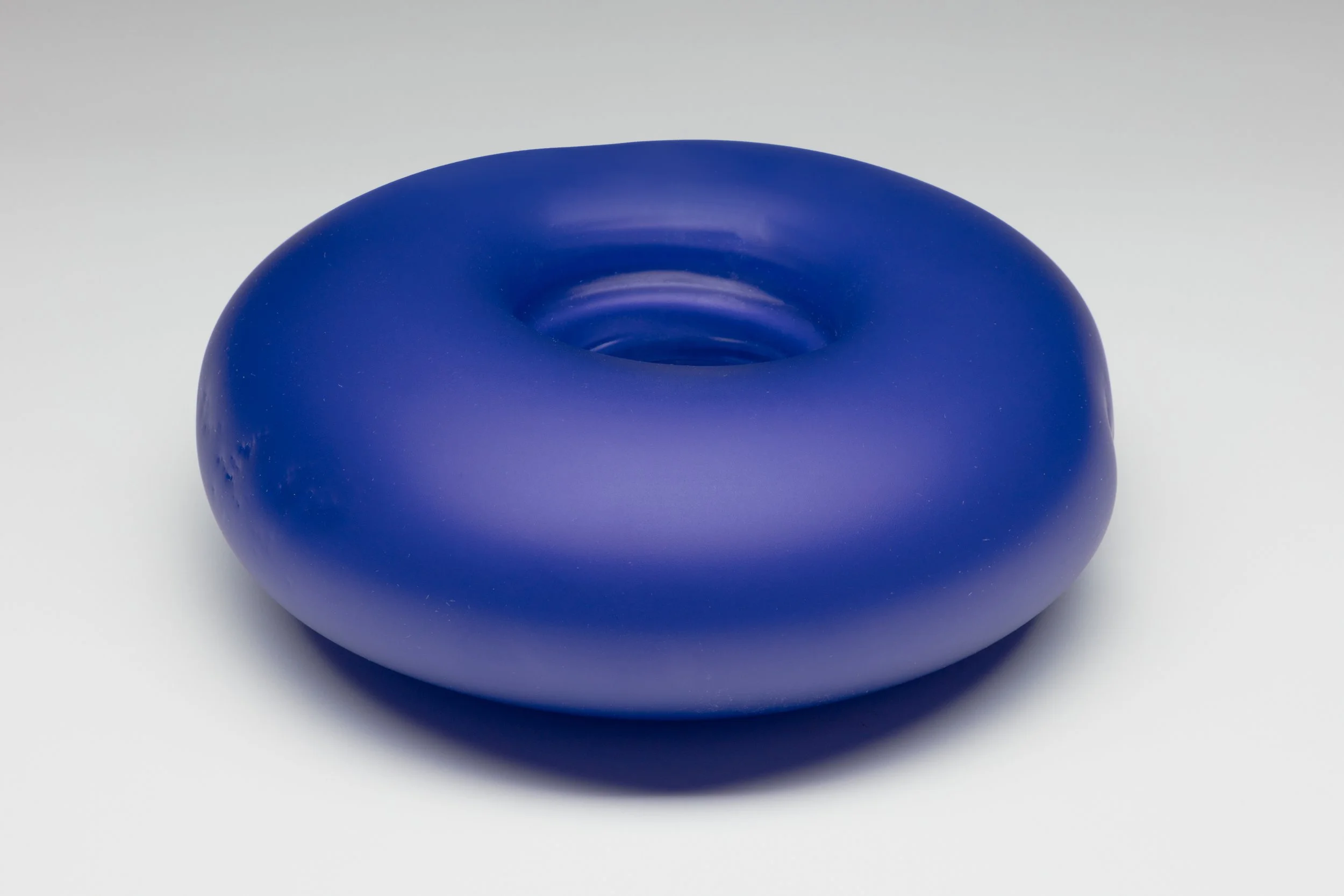
Wendy Red Star, Dogon Donut Bead (DGN WRS2026_013), 2026, Glass, 3 x 8 x 8 in.
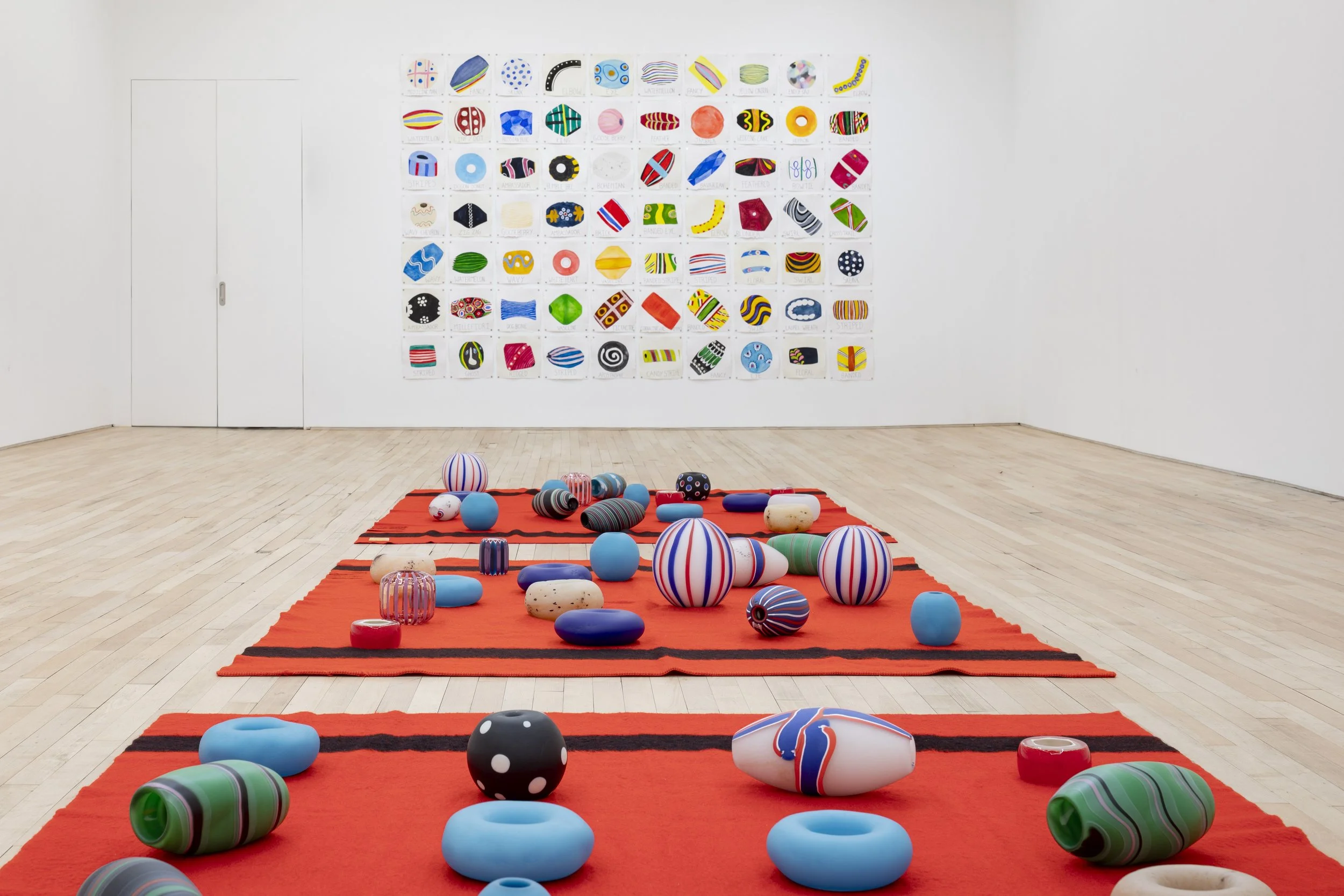
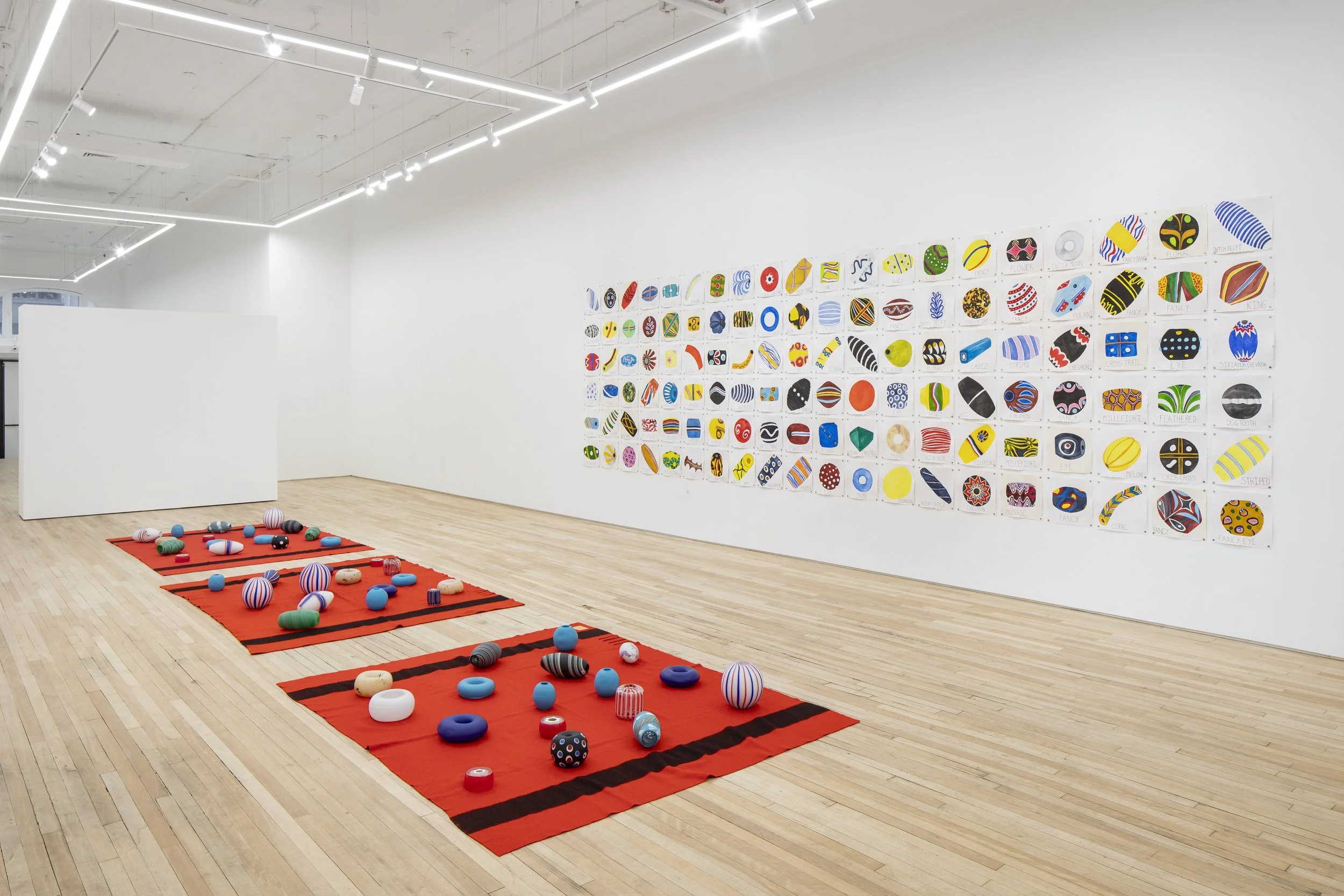
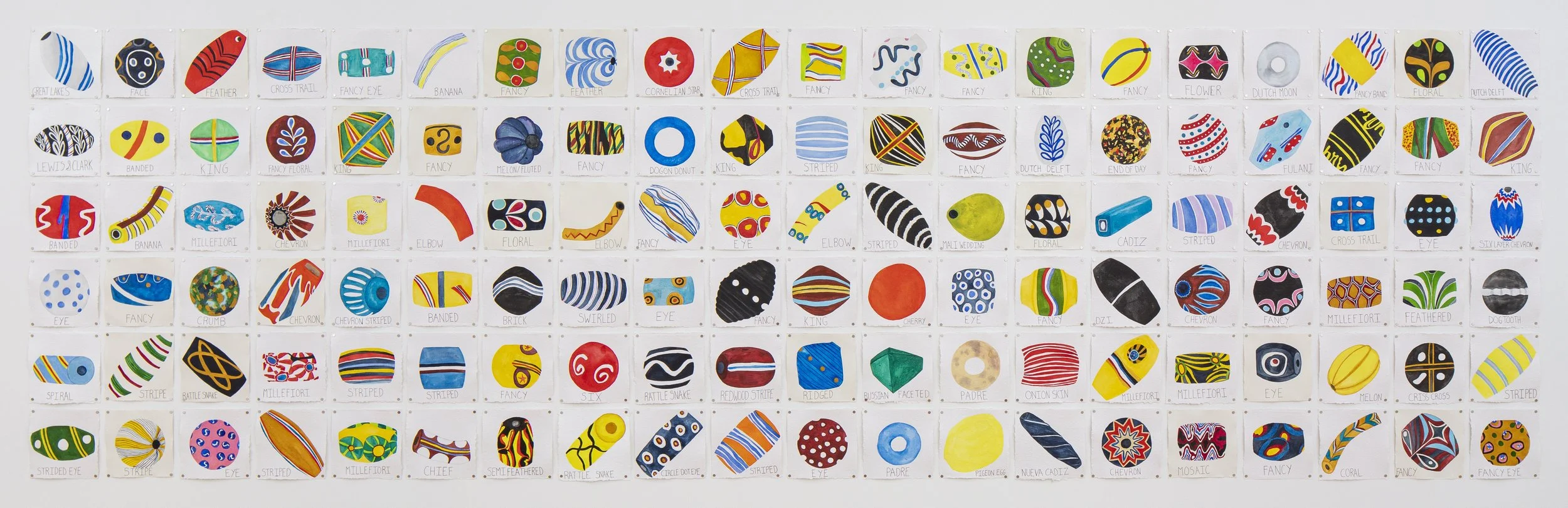
Wendy Red Star, Catalogue 1, 2026, Watercolor, 77 x 259½ in.
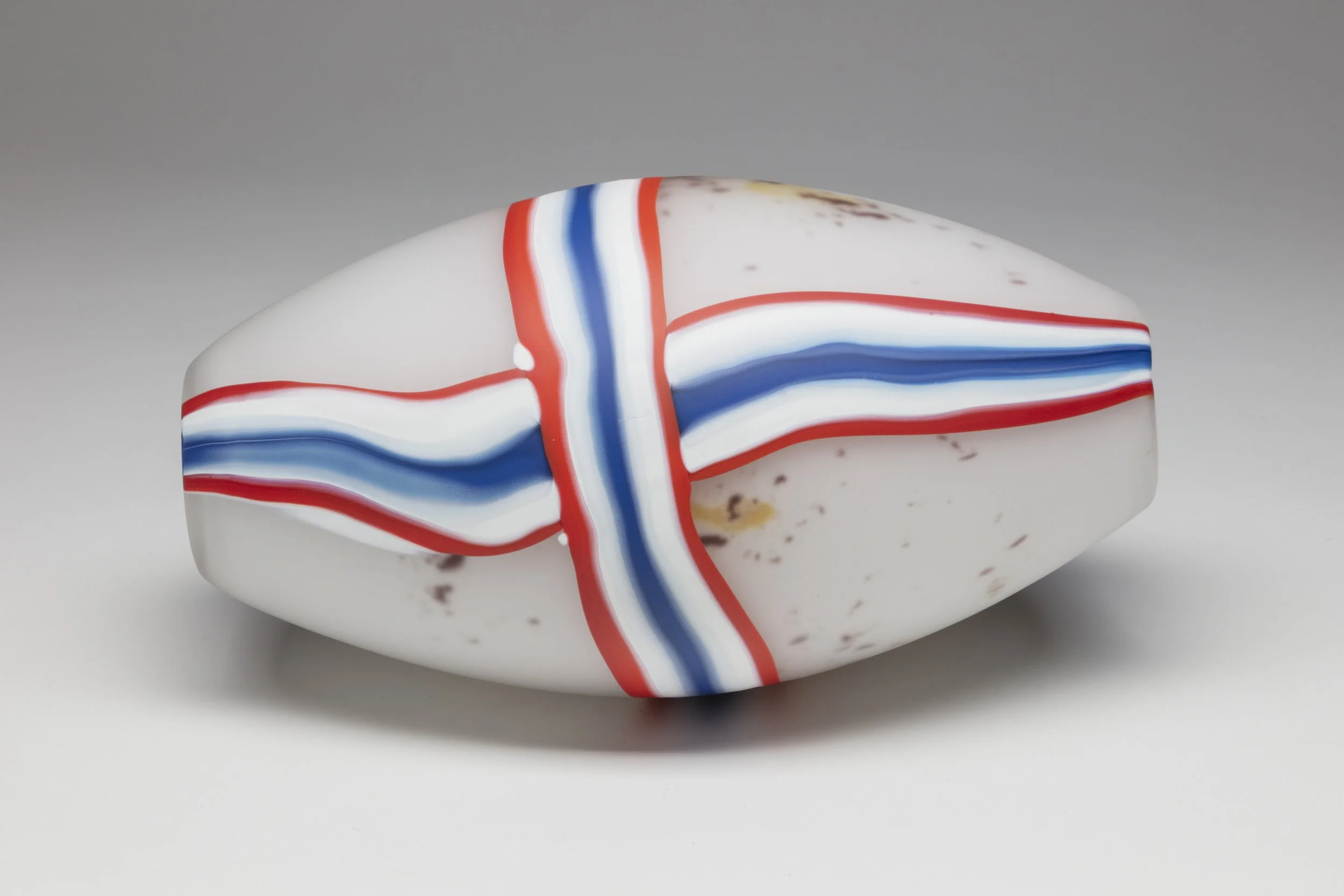
Wendy Red Star, White French Cross Bead (WFC WRS2025_037), 2025, Glass, 5¾ x 11 x 5¾ in.
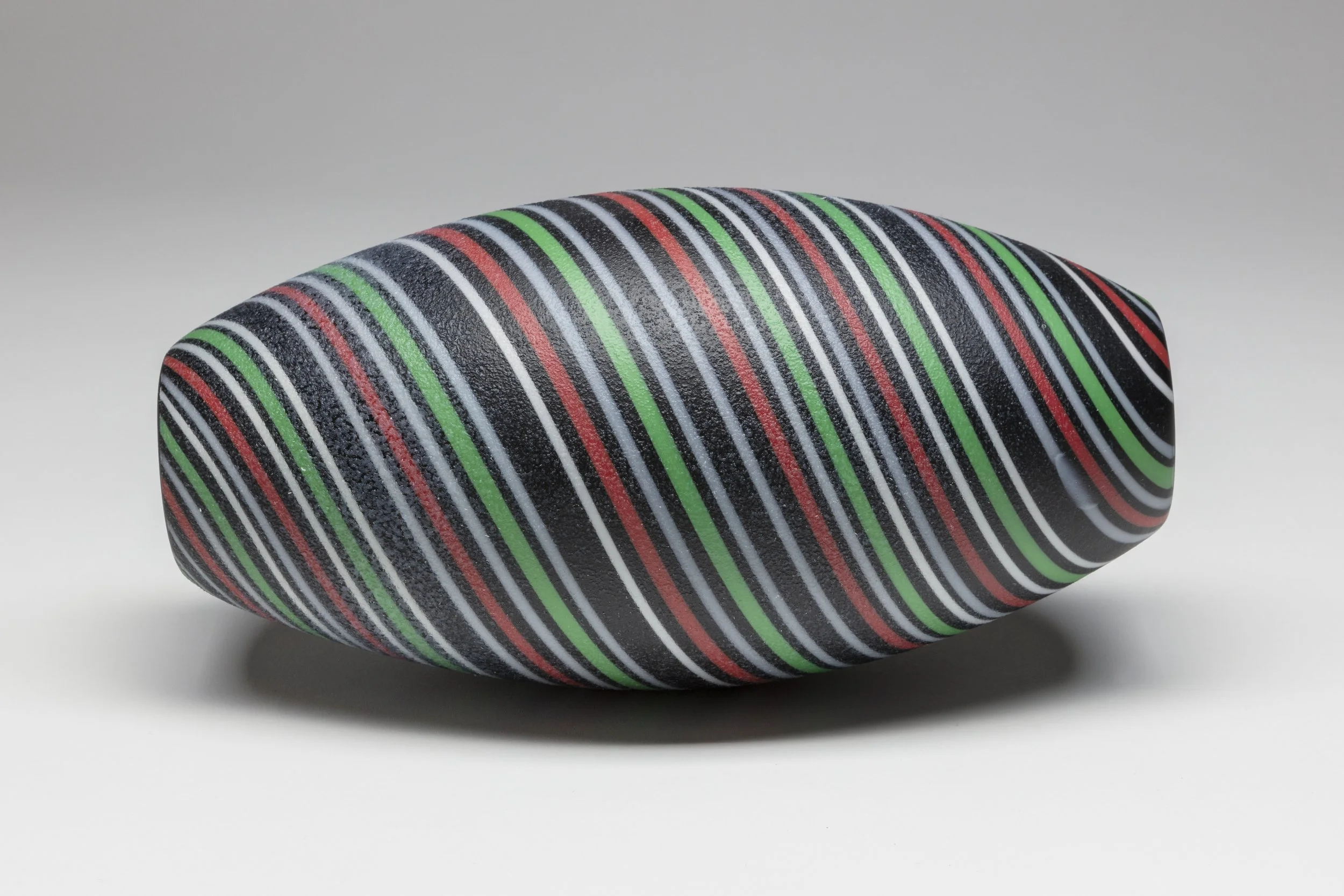
Wendy Red Star, Fancy Spiral Bead (FSP WRS2025_027), 2025, Glass, 5 x 9¾ x 5½ in.
Wendy Red Star | One Blue Bead
March 6 – April 18, 2026
Sargent’s Daughters is pleased to present One Blue Bead, a site-specific installation of new works by Wendy Red Star. Red Star’s highly acclaimed, multidisciplinary practice centers the histories, archives, and lived knowledge of the Apsáalooke Nation. This latest body of work centers on the artist’s research into trade beads – items that were simultaneously currency between colonizers and Indigenous people, variable markers of value, and compelling aesthetic objects. Through watercolor paintings and glass sculptures, Red Star indexes dozens of historical trade bead types, creating a taxonomy of their designs and histories.
Legend has it that the Dutch purchased the island of Manhattan in 1626 from members of the Munsee tribe for a handful of beads. There are no clear historical records of this transaction, and what does survive is entirely from the perspective of the Dutch. The story is often told to highlight the naiveté of the Indigenous people, who allegedly sold what would become some of the most valuable real estate in the world in exchange for trinkets. One Blue Bead takes the beads themselves seriously, using them as a means to understand systems of value to both Native and non-Native people in the past and today. Red Star traces the path of the beads from Europe to Africa and the Americas, where these tiny objects were traded for human lives and tracts of land. An early example of mass-production, beads allowed colonists to assign exchange values to everything they touched, transforming the world through their circulation.
Viewers entering the exhibition can first pick up a copy of One Blue Bead Exchange, a newspaper created for the exhibition. Akin to a daily stock report, the paper informs readers of the going exchange values of beads, as well as their historical origins and trade routes. Each design – Dutch Blue Dogon, Padre, Red White Heart – was produced in a specific place and time, and each circulated differently in colonial markets. As the paper notes, 1-2 Chevron beads could buy 1 prime winter beaver pelt, while 6-8 Gooseberry beads could buy a small portion of maize, tobacco, or fish. The market outlook for each bead is also listed, highlighting ongoing value shifts precipitated by private collectors and museums.
Inside the main gallery, viewers are immersed in Red Star’s bead exchange. Watercolor paintings documenting 200 different types of beads are displayed in monumental grids. On the floor of the gallery, larger-than-life replicas of the beads are displayed on Hudson Bay point blankets, red wool blankets with black stripes that recall the original context in which beads changed hands. These beads were each hand-blown using traditional methodsand made to match surviving examples of each bead type as closely as possible.
One Blue Bead is on view one block from Collect Pond Park, where the sale of Manhattan is said to have occurred. Only a short distance south, the New York Stock Exchange churns, maintaining the city’s status as a global financial center. On Canal Street, surrounding the gallery, vendors haggle with tourists over knock-off designer bags and sunglasses spread out on blankets lining the sidewalk. The gallery where the exhibition is installed is itself a site of commerce. Situated within this landscape, Red Star’s work is simultaneously a close study of material history, an exploration of continued traditions of hand-making, and an interrogation of the art market as a nexus of exchange, where art objects exist as both commodities and intangible value signifiers.
Wendy Red Star (b. 1981, Billings, Montana; lives and works in Portland, Oregon) is an Apsáalooke artist whose multidisciplinary practice is grounded in the histories, archives, and familial knowledge of the Ap sáalooke Nation. Raised in the district of Pryor on the Crow reservation in Montana, her work grows from the stories passed through her family, the historical materials she encounters in her research, and the lineage that shapes her understanding of the past.
Her practice brings Apsáalooke histories into close relationship with the narratives preserved in U.S. archives. Guided by attention and clarity, she listens to inherited stories, reads archival records with care, and assembles fragments into forms that hold time, memory, and historical presence together.
Red Star received her MFA from the University of California, Los Angeles, and her BFA from Montana State University, Bozeman. She is the recipient of a MacArthur Fellowship (2024), a Smithsonian Artist Research Fellowship (2018), the Louis Comfort Tiffany Award (2017), the Bonnie Bronson Fellowship (2024), and the Infinity Award in Contemporary Photography and New Media (2024).
Her work has been exhibited nationally and internationally at institutions including The Metropolitan Museum of Art, the Museum of Modern Art, the Whitney Museum of American Art, the J. Paul Getty Museum, Fondation Cartier pour l’Art Contemporain, and the British Museum. In 2027, the National Portrait Gallery will present a major solo exhibition of her work.
Press
Hyperallergic | April 2, 2026